Users are increasingly using the help of AI Agents to get their tasks done on the web. The work might include finding responses to their questions, shopping, and more. This shift has already caught the attention of businesses and developers, who frequently wonder about the best way to participate.
The Agentic Web is not a new web. It is the exact same web we use today. The only difference is that users are increasingly interacting with it not just with their hands, eyes, or assistive technology, but with the help of AI Agents.
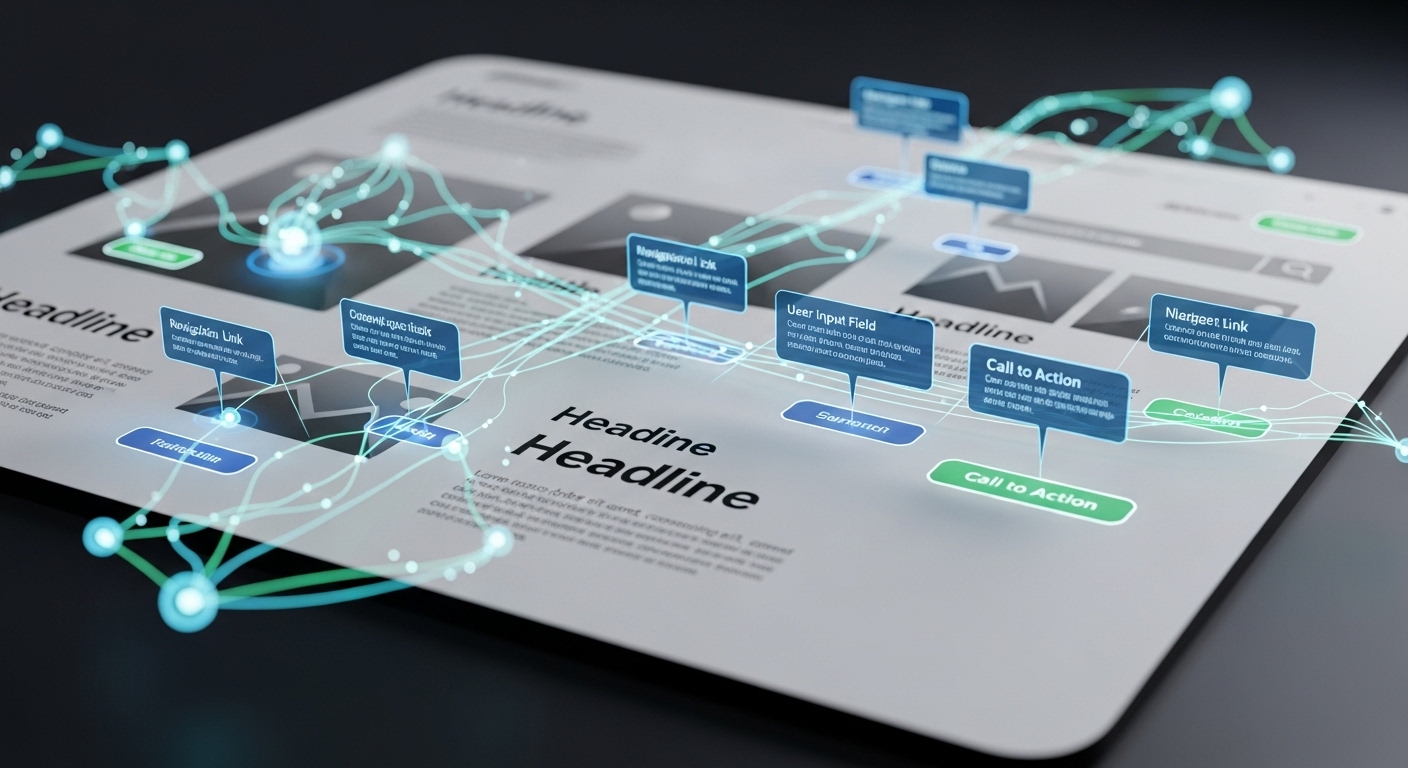
AI Agents represent a new way for users to interface with the web. They rely on your site being discoverable, navigable, accessible, and useful. To participate in this shift, you do not need to build a new internet. You need to make your existing site "agent-ready."
In this article, we will establish how to make your site agent-ready through a baseline framework of Discovery, Understanding, and Usage, while also exploring the strategic considerations for developing bespoke, on-page agents.
Understanding Agent Diversity
As AI agents change how users interact with the web, it is vital to distinguish between two main categories: on-page agents and off-page agents. Understanding this distinction is key to your strategy.
- On-page Agents: These are integrated directly into your website or act as the website interface itself. On-page agents allow for high-fidelity, site-specific experiences that incorporate full domain knowledge, understand all known workflows, and provide tailored, high-context interactions that off-page agents cannot replicate. But it comes with a high price tag: you own the complexity, the maintenance, and the integration burden of building and running the agent.
- Off-page Agents: These agents are external to your website. They are generally owned and operated by third parties, such as browser agents like Gemini in Chrome, but they can also be owned by you (e.g., via a browser extension or a dedicated agentic service like Openclaw). Integrating with off-page agents delegates the complexity and cost of building and running the agent to the agent provider or platform. It's possible to provide context to off-page agents via context engineering by providing skills and tools.
This shift allows you, as a developer, to focus on the areas where you have the most leverage: optimizing your site's structure to ensure agents understand it better, and implementing new APIs (like WebMCP) that expose deterministic tools to those agents.
Strategic Perspectives
Deciding how to participate in the agentic web is a strategic choice that balances resource allocation against potential business value.
For the vast majority of websites, the most cost-effective entry point is optimizing for the broader agentic ecosystem. That is, off-page agents. By focusing on site-wide "agent-readiness," you ensure that third-party agents can effectively discover, understand, and interact with your content without you needing to build or maintain your own agent. This leans on using techniques and patterns that are already well-known to site developers, that use deterministic solutions, and minimizes the need to learn new techniques.
Investing in a bespoke on-page agent is a different strategic commitment. This path is justified when your product requires an agentic interface that needs deeper domain knowledge to be effective, and cannot be easily implemented by off-page agents via skills or tools.
A major advantage here is that on-page agents do not require users to install any external dependency, nor do they rely on additional distribution channels like browser extensions. The agent is simply available right there on the website. Furthermore, their deep domain knowledge provides an opportunity to more gracefully handle failures and guide users through complex journeys.
However, building this requires accepting the complexity of harnessing the probabilistic nature of large language models. This includes not only dealing with technical challenges like prompt engineering and context management, but also managing significant liabilities and brand image risks related to non-determinism. Creating and running robust evals is essential to measure and mitigate these risks.
You do not have to choose one over the other. The most pragmatic approach is to prioritize foundational agent-readiness as your baseline. From there, you can layer on bespoke on-page agent capabilities only where the return on investment, in terms of user journey completion or product value, warrants the significant development and maintenance effort.
Building for off-page agents
Discovery
Before an agent can use your site, it needs to find it and understand its purpose. Discovery is about making your site machine-readable and explicitly declaring what you offer. Many of the techniques required for Discovery overlap with Search Engine Optimization, as they fundamentally aim to make content machine-readable. However, the Agentic Web also introduces new, purpose-built standards designed to facilitate direct, explicit communication between sites and AI agents.
- Machine Readability: Structurally, your site should be designed to facilitate data extraction. While modern search engines are adept at rendering client-side JavaScript, many AI agents struggle to do so, making Server-Side Rendering (SSR) critical for agent discoverability. If an agent cannot parse the raw HTML or text content, it cannot build the context required to act on your site.
- Schema Markup (JSON-LD): JSON-LD is a powerful way to provide explicit, structured data about your site, your organization, and your content. By leveraging Schema.org vocabulary, you offer agents a clear, unambiguous map of what your pages represent, whether it is an article, a product, or a service.
- AI Discovery Files: Just as we use
robots.txtfor traditional search engines, the agentic web is adopting new standards for AI discovery. Files likellms.txtandidentity.jsonprovide a direct communication channel to AI agents, allowing you to define your site's capabilities, purpose, and even specific interaction guidelines. - Semantic HTML Hierarchy: Agents rely on semantic DOM structures to understand the hierarchy and intent of your page content. Using proper tags (e.g.,
<article>,<nav>,<header>,<footer>) helps AI parsers differentiate between primary content, navigation, and supplementary information, leading to more accurate context generation. - Crawlability & Freshness: Traditional SEO practices still matter. Configuring
robots.txtcorrectly ensures agents focus on the right content. Furthermore, prioritizing Server-Side Rendering (SSR) and maintaining up-to-date XML sitemaps ensures that agents have access to the most recent and relevant version of your site, reducing the likelihood of working with stale data.
Optimizing for Understanding
Once an agent has moved from the discovery phase and opened your site, either in a headless browser or a tab open on a user's machine, it must be able to interpret and interact with the page effectively. At this stage, many modern agents do more than just ingest raw HTML. They "see" your site by processing the fully rendered page, using vision models to analyze screenshots, mapping the rendered DOM to identify interactive elements, and querying the accessibility tree to understand structure and intent. Optimizing for this phase means ensuring your rendered content is both visually coherent and semantically clear.
- Accessibility (The Accessibility Tree): Think of accessibility as the "universal language" of the web. Screen readers rely on the accessibility tree to interpret the DOM for visually impaired users; AI agents use this same underlying structure to understand the purpose of page elements. By ensuring your site is semantically accessible (using proper ARIA labels, alt text, and logical focus management), you provide a clean, structured representation of your site that agents can easily navigate and interpret.
- Semantic DOM Structure: Agents rely on the hierarchical structure of your DOM to determine importance and intent. Using HTML5 semantic tags, such as
<main>,<section>,<article>,<aside>, and<header>, tells an agent exactly what the primary content is, what is navigation, and what is secondary. A flat,div-heavy DOM structure forces an agent to infer the page layout, which leads to lower reliability. - Visual Stability (CLS): Cumulative Layout Shift (CLS) is a performance metric that measures how much elements move around as a page loads. For an AI agent, visual stability is crucial. If an agent is attempting to interact with a button or a form field, and the element shifts position unexpectedly, the agent may interact with the wrong element or fail entirely. A visually stable site ensures the agent can map its understanding of the interface to the actual interactive elements reliably.
Crucially, this work is not just for agents. The same foundations that help agents understand your site also create a demonstrably better, more reliable experience for your human visitors: accessibility, semantic structure, and visual stability.
Optimizing for Usage
While Discovery and Understanding help an agent find and interpret your content, Usage is where the actual value is created: the point at which an agent executes tasks on behalf of the user.
Moving Beyond "Actuation"
Currently, many AI agents interact with the web through "actuation", simulating human input by clicking buttons, filling forms, and navigating menus based on their interpretation of the visual UI, DOM structure, and accessibility tree.
As user journeys become longer and more complex, agents require increasingly more context to accurately interpret the signals provided by screenshots, the DOM tree, and the accessibility tree. This requirement for richer context increases the computational load, leading to higher latency, and elevates the risk that a model might misinterpret a signal, causing it to take a wrong turn in the workflow.
Introducing WebMCP
WebMCP addresses this challenge by enabling developers to provide explicit, structured interaction tools for agents, significantly decreasing the amount of context needed to take action.
Instead of requiring the agent to infer the correct action from visual or structural cues, WebMCP allows you to formally define tools that an agent can invoke directly. By providing clear, deterministic definitions, such as checkout, apply_filter, or search_inventory, you expose the capabilities of your site rather than just its presentation.
The Benefits of Explicit Usage
- Higher Reliability: Because the agent is invoking a defined tool rather than interpreting complex, multi-modal signals from the rendered DOM, it eliminates ambiguity and significantly reduces the context overload for the model, leading to far more predictable and reliable outcomes.
- Explicit State Management: When an agent uses a tool, your site returns a structured response indicating success or failure. This allows the agent to maintain a much better understanding of the application state, enabling multi-step workflows to proceed with confidence.
- Efficiency: Actions that might require an agent to "look" and "click" across multiple pages can often be condensed into a single tool call, leading to faster, smoother user journeys.
Implementation & Tooling
Making your site "agent-ready" does not require flying blind. As the Agentic Web matures, specialized tooling is emerging to help developers audit their sites and ensure a smooth experience for AI agents.
Auditing Readiness
To get a baseline of how your site performs in an agentic context, look for evolving standards in existing performance and SEO audits.
- Lighthouse "Agentic Browsing": Just as Lighthouse currently audits for performance, accessibility, and SEO, future auditing tools are being developed to score "Agentic Browsing." These tools will simulate agent interactions, checking your DOM hierarchy, semantic markup, and the presence of AI discovery files to generate an actionable readiness report.
- Is It Agent Ready?: Scan your website to see how ready it is for AI agents. This tool checks multiple emerging standards, from robots.txt and Markdown negotiation to MCP, OAuth, Agent Skills, and agentic commerce.
Staying Updated
This Agentic Web space is evolving rapidly; bookmarking these resources is a great way to stay ahead of the curve.
- Agentic Web News: Track the companies, protocols, and market signals shaping the Agentic Web.
- AI Focus: A collection of essays and projects on how AI is changing the medium of the web and web development at large, by Paul Kinlan.
- Kasper Kulikowski's Blog: A personal tech blog exploring the space where the web and agents connect, sharing thoughts and demos.
- AI Radar: Explore real-world AI use cases, understand requirements, and shortlist candidates with a clear path from idea to production.
Building for the Agentic Web
The Agentic Web represents a natural evolution of our current digital landscape. By focusing on the foundational framework of Discovery, Understanding, and Usage, you can ensure your site is ready to participate in this evolving ecosystem. Start by making your site machine-readable and explicitly declaring your capabilities. Prioritize clean, semantic engineering to ensure agents can accurately parse your content. Finally, look toward emerging standards like WebMCP to move beyond interaction patterns that rely on implicit cues and provide agents with robust, deterministic tools.
Check out the developer toolkit to make your website agent-ready and join the WebMCP Origin Trial to begin experimenting. By optimizing for foundational agent-readiness today, you will be well-positioned to leverage the future of agentic interactions, whether through broad third-party ecosystem support or by developing bespoke on-page agents when your business goals demand it.
Comments
Reply
Reply
Leave a comment
Comments are moderated and may take some time to appear.